Junior School


Overview

The Junior School STEAM program places purposeful collaboration, design and inquiry at its core, valuing authentic problem solving and the learning process as much as the final product, while nurturing each girl’s curiosity and engagement with the world. The newly refurbished STEAM Lab provides a flexible, well‑resourced environment that supports integrated P–6 programs designed collaboratively by class, specialist teachers and the P–6 Coordinator. Central to learning are collaboration, creativity, critical thinking and communication, with robotics playing a key role in developing these skills across both classroom and co‑curricular settings. Students progress from unplugged computational thinking in Kindergarten to increasingly sophisticated engineering and programming experiences, using tools such as Beebots, Dash and Dot, Lego WeDo 2.0, Sphero SPRK+, Lego Spike Prime and Lego EV3 Mindstorms to explore coding, engineering and problem solving. As the program continues to expand, it offers growing levels of challenge, tools and opportunities for girls to develop as thinkers, creators and innovators.


STEAM Clubs

STEAM Clubs are an ideal co-curricular for students as it’s a high engagement, low-risk, and optimal learning space for all. Junior School STEAM Clubs are now categorised and grouped, based on subjects and skills for each Term. These STEAM Clubs are called Techies, Creators, Engineers and Scientists, and are open to students in either their Hillingdon or Fiona campus. To sign up, Registration Forms are sent via a HUB notice a Term prior to the co-curricular’s commencement.
Due to class size limits, the STEAM Clubs are organised on a first serve basis with a waitlist that rolls into the following Term. Note that students must make a regular commitment to the STEAM Club as attendance is required for the hands-on collaborative sessions.

TERM 1 – STEAM Club: Techies

Techies will build upon students’ coding, robotics, and technology skills. The girls will participate in a range of activities, promoting their curiosity and love of learning about the world of robotics, through small group-based activities. In this lunchtime club, students will use a variety of coding platforms and languages using visual block-based and text-based programming.

  • Fiona Techies will complete a series of challenges applying their programming skills to control Ozbots, Drones, Spheros, CoSpaces VR and EV3 robots.
  • Hillingdon Techies will use visual block-based coding platforms to complete a series of simple challenges. They will apply their programming skills to control Dash and Dot, Bee-Bots and Spheros.

These weekly robotic challenges support students’ coding and Computational Thinking skills as they creatively problem-solve solutions to various robotics tasks. Suitable for passionate students regardless of their level of coding knowledge. This club is lots of fun and a great way to start the year by making new friendships.

TERM 2 – STEAM Club: Creators

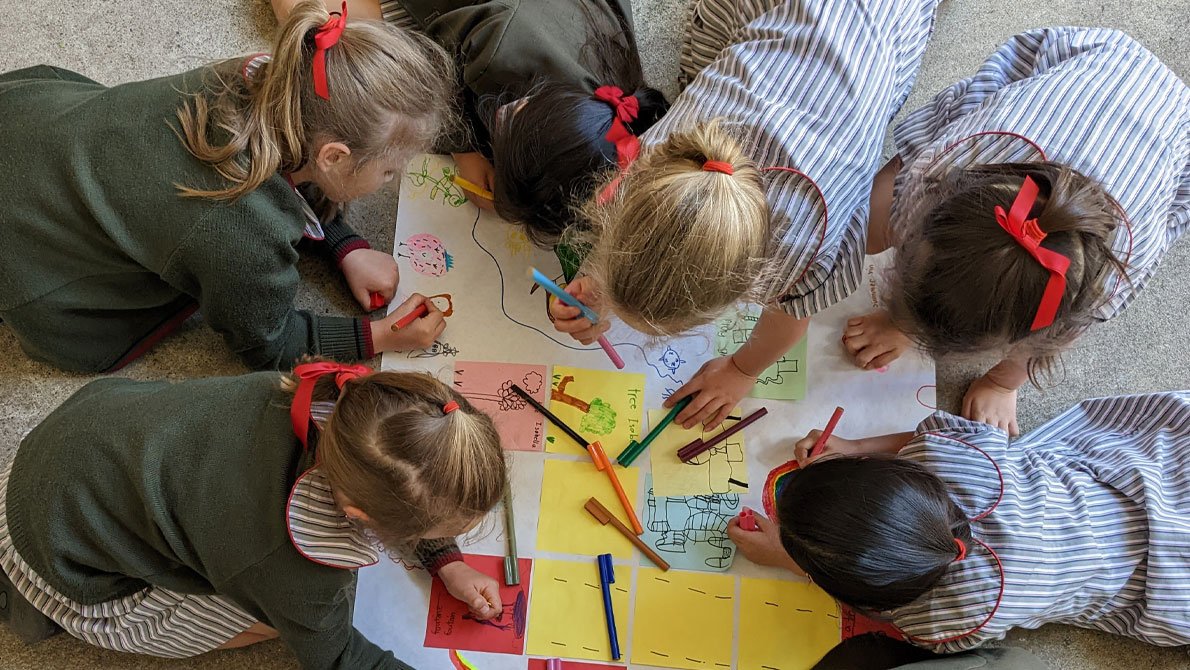
Creators will build upon students’ collaboration, creativity, and communication skills. This club is the epitome of 21st century learning as students utilise small group work to problem-solve and create a solution. Using the LAUNCH Design Framework, the girls will identify a problem (or enter a competition) and then work together using a range of platforms to design a solution. This brings together technology, coding and the Arts, depending on the path the group choose to take.

  • Fiona Creators will work closely in small groups during the LAUNCH Design Framework. Students will be supported through this process but ultimately, they have the responsibility and ownership to work with their group in order to determine the success of their creation. Projects include: 1 minute film competition (green screen, iMovie), Young ICT Explorers (micro:bits, MakeyMakeys, App design), STEM Video Game Comp (Scratch, Minecraft Edu Ed).
  • Hillingdon Creators will have a more guided approach as brainstorming, problem-solving and collaborating skills are teacher led and modelled throughout the LAUNCH Design Framework. Projects include: Clay Stop Motion (iMovie, animations), Song creations (Garage Band), invent a new product (3D Printing, Maker Space resources).

It is essential to highlight the focus on collaboration within this STEAM Cub. Students must lead their project together in their groups. Furthermore, whilst there are opportunities to explore different resource and platforms, this is a Term long project. Therefore, attendance and participation is crucial for passionate and committed learners. If students choose to enter a Competition, they will also be expected to input further time into their group project during the Term 2 holidays.

TERM 3 – STEAM Club: Engineers

Engineers will build upon students’ critical thinking, inventing, and engineering skills. The girls will participate in a range of tinkering, building and construction activities using a variety of materials and resources such as Lego and eco-friendly recyclables. Students will be introduced to a range of technical tools and technologies throughout the weeks to enhance their understanding.

  • Fiona Engineers will have weekly build challenges to stimulate their improvisation and tinkering skills. However, towards the end of the Term there will be opportunities to for self-guided learning by constructing their own project (rollercoasters, lego robots, inventions).
  • Hillingdon Engineers will largely focus on weekly building challenges using materials and hands-on resources. Whilst some sessions might require students to invent and design and solution, the core focus here is building students’ understanding of structures, materials and other engineering mechanisms.

Collaboration will be key during this club, with communication, perseverance and engagement being instrumental to their success and enjoyment of the challenges. Towards the end of the Term, students apply their knowledge and skills learnt to design, invent and construct their own structure or product.

TERM 4 – STEAM Club: Scientists

Scientists will build upon students’ investigation, research, and scientific thinking skills. This club is a wonderful way to encourage students to think about the world around them and how things work. There will be an array of weekly science experiment and investigation activities offered from crystal growing, to chemistry reactions to gardening as eco-warriors! Towards the end of the Term, students will also have opportunities to create electrical circuits.

  • Fiona Scientists will complete a series of fun experiments and investigations involving chemistry and forces. They will then further their understanding about light and electrical currents and they use Light Kits and MakeyMakeys to build electrical circuits.
  • Hillingdon Scientists will focus on gardening and then energy concepts as they learn about electrical circuits using LittleBits, simple circuit parts and other conductors of electricity. They will be challenged by creating different products with their LittleBits pieces, such as a morning alarm, light meter and car motor.

These weekly scientific challenges will support students to use their scientific knowledge and skills to make informed decision about the application and implications of Science in the world around them, whilst they are also are encouraged to develop their curiosity and skills to further their thinking.

Why STEAM Clubs?

Ultimately, this latest STEAM Club arrangement provides amazing opportunities for students to embed and harnesses the Dalton philosophy by driving collaboration, independence, responsibility and reflection.

  • Collaboration: Students will be able to work closely with their peers and other cohorts in a mixed setting. Working with their peers through supporting and learning with one another, is a key 21st century skill of collaboration and creativity, whilst also being an ideal way to learn and grow as an Ascham student. Students will be able to sign up for these lunchtime clubs with an option of days, which provides a greater availability for students to participate within their school community.
  • Responsibility: Students will be able to take responsibility for their learning as modelled and guided with their problem-solving and regulation of their learning, challenges and project work.
  • Independence: Students will be able to have independence in their selection of STEAM Club as they will able to see the yearly overview in order to plan for their interests and prioritise their passions. Within each Term, students will also have opportunities to explore a variety of resources, with selected materials provided to each small group in order to differentiate to students’ learning needs and develop their independence as curious self-learners.
  • Reflection: Students will be able to harness reflection during the lessons when working in groups/independently, but also at the end of the Term as they showcase their learning journey to their peers. We also hope that some eager STEAM Club students will further their leadership skills and reflect on their learning through School Assemblies and eNews article.